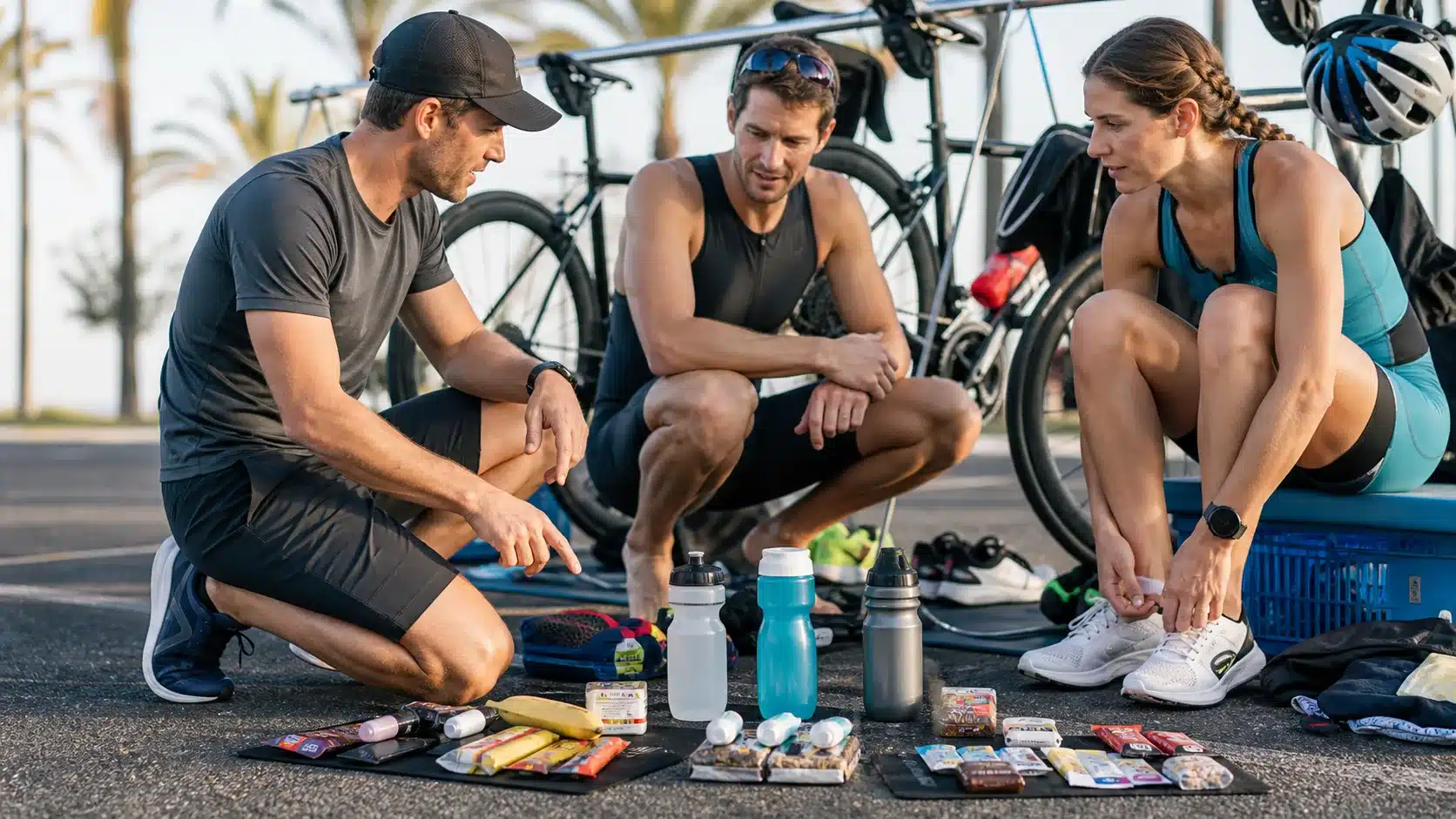
Make every gram of fuel worth consuming
Good triathlon race prep isn’t simply about eating more carbohydrates. It’s about getting usable energy and fluid into your body at a rate you can absorb and use. So what is that rate?Downloadable nutrition charts look authoritative and reassuring, but they don’t know how your body responds when race pressure is high. They don’t account for your fitness, sweat rate, gut tolerance, planned intensity, work schedule or what will actually be available at an aid station.
I often work with athletes who have little time to rehearse fuelling. The parent training before the kids wake up, the busy executive travelling for work and the experienced endurance athlete may all have very different needs, even when they’re racing the same distance. Copying a fuelling plan from a club mate can turn race day into an untested experiment.
The science is simple at its core: performance is more predictable when your fuel strategy matches your phenotype, physiology and race demands. Phenotype sounds technical, but it simply means the observable way your body reacts to training, heat, food, intensity and fatigue. Personalised fuelling is not fussing over tiny details. It is a practical way to reduce surprises when they matter most.
Generic plans ignore your metabolic and gut profile
Two athletes can ride at the same power and need very different amounts of carbohydrate. One may be comfortably below their limit, while the other is working close to it. Body size, training status, muscle glycogen, metabolic fitness and race intensity all influence how quickly glycogen is burnt through.
Gut tolerance is another major piece of the puzzle. Your body must move food and drink through the stomach, absorb it in the gut and deliver it while you’re exercising. That process is affected by fluid intake, carbohydrate type, drink concentration, effort level and your experience of eating on the move. A very fit athlete can still have a poor race if their gut can’t handle their planned intake at race effort.
Fat oxidation matters, particularly at easier intensities, but it does not remove the need for carbohydrate. Hard climbs, overtaking, changes in pace, heat and a fast final run all raise carbohydrate demand. Late in a long-course race, that demand can arrive just as glycogen stores are becoming limited. Generic plans rarely account for these changing demands.
Personal fuelling strengthens triathlon race preparation
Testing gives us a better place to begin than guesswork. Field and laboratory assessments can help us understand athletes’ metabolism at various paces or powers, aerobic efficiency, sweat losses and the likely effort they can sustain. Those details connect the science to the question every athlete really wants answered: what should I eat, drink and carry at each point of my race?
Of course, distance changes the fuel problem quite dramatically. 70.3 racing demands that you fuel consistently to support bike power and protect your run but, given that most athletes start with around 2-3 hours of glycogen available within their muscles and liver, there tends to be more flexibility at this distance. However, Ironman racing requires a well-practised approach to carbohydrate, fluid, sodium where appropriate, and the mental challenge of eating when food stops sounding appealing. For both distances, slower athletes require even more thorough fuelling plans as they’ll be out on course longer.
Remember: carbohydrate targets are starting hypotheses, not rigid rules. In shorter events, intake may be modest. In longer racing, targets may rise to 90 or more grams per hour for athletes who have trained their gut and use suitable mixed carbohydrate sources. The best target is not the biggest number on a packet. It is the highest amount that supports your performance without gut distress, poor hydration or unwanted changes to pacing.
Train your gut and practise decisions under pressure
Your gut can learn. Regularly taking planned carbohydrates and fluid during selected key sessions helps your body become more comfortable with race-day intake. It also builds confidence. We do not need to turn every easy session into a feeding exercise, but race-specific sessions should include race-specific fuelling.
Effort, heat and hydration all affect digestion. Hard intensity reduces blood flow to the digestive system, while dehydration can slow gastric emptying and make stomach symptoms more likely. For that reason, comfortable endurance rides are not the only place to practise. We want to see how your plan behaves during race sim rides, brick sessions, climbs, tired legs and warmer conditions.
A useful plan also includes calm decisions when things go wrong. Bottles get missed. Gels get dropped. Swim starts are delayed. A hot afternoon can arrive after a cool morning. Rather than panicking or taking in everything at once, know what is most important and what can change.
After key sessions, I recommend recording a few simple notes:
- Total carbohydrate, fluid and sodium intake, where relevant
- Perceived energy and changes in pace or power
- Gut comfort during and after the session
- Urine colour after training
- Weather, route conditions and anything unexpected
Over several weeks, those notes reveal patterns that a one-off online calculator can’t see.
Adapt fuel to distance, weather and your calendar
Racing in April or September can be particularly variable. You may start in cool air, then face a warmer afternoon, wind or rain. Early and late-season 70.3 and Ironman athletes should rehearse cooler-weather and warmer-weather versions of their plan, rather than assuming one bottle strategy will cover every condition.
Real life belongs in the plan as well. A strategy that requires elaborate preparation every day may fall apart during a busy fortnight at work or a family trip. I encourage athletes to identify practical staples they can buy, pack and rehearse: reliable pre-training meals, office snacks, travel-day options and straightforward race-week shopping choices.
Flexibility is not vagueness. Your blueprint should have clear fuel and fluid targets, alongside clear adjustments for heat, changing pace and event logistics. That gives you choices without leaving you to make every decision from scratch when you are tired.
Build your personal race-day fuel blueprint
I use INSCYD testing and sweat analysis with many of my athletes, so I know precisely how much glycogen they burn through at any given power or pace, as well as their precise hydration and sodium needs. If you don’t have a coach and want that sort of preparation, then book a consult with me.
For those who don’t have access to these numbers, start by reviewing the notes from those recent long sessions and race sims. When did your energy dip? When did gut symptoms appear? What did you consume, and what were the conditions? From there, build a practical plan for pre-race food, bike and run carbohydrate, fluid, sodium where appropriate, caffeine, aid stations and contingency actions.
The strongest triathlon race preparation respects your physiology, ambitions and life outside sport. Test the plan repeatedly, keep useful notes and refine it from what your body shows you. When every gram has a job, race day becomes less of a gamble and more of a well-rehearsed performance.
Turn your fuel strategy into a competitive advantage
At TricoachMatt, we translate your training data, schedule and physiology into decisions that hold up when the race gets demanding. Our triathlon race preparation coaching helps busy athletes build practical nutrition and pacing strategies for sprint, Olympic, 70.3 and Ironman events. If you’re ready to replace guesswork with a plan designed around your real life, contact me to discuss your goals.